The 98.6°F Normal Temperature Everyone Knows Is Based on 150-Year-Old German Data
The Number That Became Medical Gospel
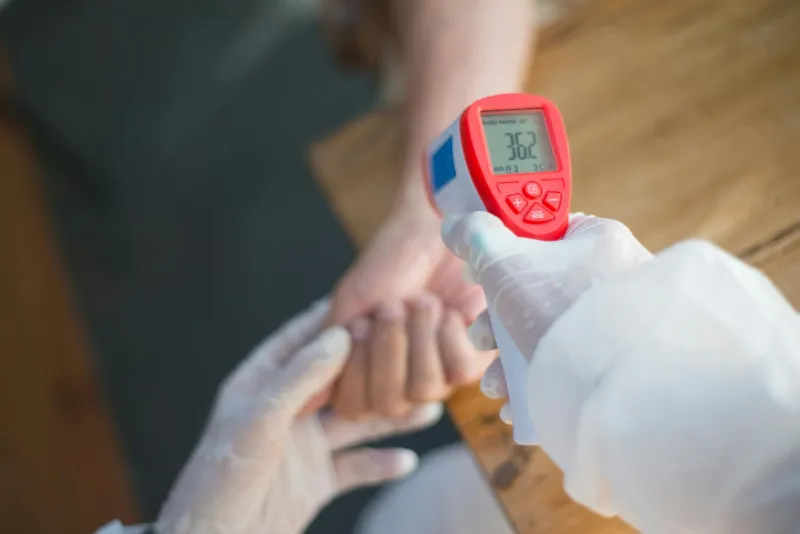
Walk into any doctor's office, and 98.6°F is still treated as the gold standard for normal human body temperature. Anything higher gets flagged as a fever. Anything lower raises eyebrows. But this seemingly precise number comes from a surprisingly shaky foundation: one German doctor's measurements from 1868.
Carl Reinhold August Wunderlich took over a million temperature readings from 25,000 patients in Leipzig, Germany, and calculated an average of 37°C — which translates to exactly 98.6°F. His work was groundbreaking for its time, but it had some serious limitations that nobody talks about today.
 Photo: Leipzig, Germany, via thumbs.dreamstime.com
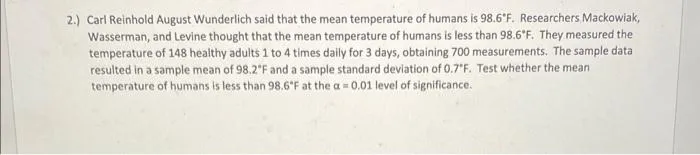 Photo: Carl Reinhold August Wunderlich, via media.cheggcdn.com
Why 19th-Century German Data Might Not Apply to You
Wunderlich's patients were all from a specific population in one German city during a particular historical period. They were dealing with different diseases, different nutrition levels, and different environmental factors than modern Americans. The thermometers he used were also primitive by today's standards — large, cumbersome mercury devices that took up to 20 minutes to get a reading.
More importantly, recent research suggests human body temperature has actually been declining over the past 150 years. A 2020 Stanford study analyzing temperature data from three different time periods found that average body temperature has dropped by about 1.06°F since Wunderlich's era. Today's actual average appears to be closer to 97.9°F.
The Temperature Drop Scientists Can't Fully Explain
Why are we running cooler than our ancestors? Researchers have several theories. Better healthcare means fewer chronic infections that would elevate baseline temperature. Improved nutrition and living conditions might affect metabolism. Air conditioning and heating give us more stable environments. Some scientists even wonder if changes in our gut microbiome play a role.
What's clear is that individual variation is huge. Some perfectly healthy people run consistently at 97°F. Others sit comfortably at 99°F. Age, time of day, hormonal cycles, and even how much you've eaten recently can shift your baseline by a degree or more.
Why Doctors Still Use the Old Standard
So why haven't medical professionals updated the benchmark? Partly because 98.6°F works well enough as a reference point for detecting fever. But mostly because changing established medical standards is incredibly difficult. Electronic health records, medical training, and diagnostic protocols are all built around this number.
The medical community has quietly started acknowledging the problem. The Mayo Clinic now defines normal body temperature as a range from 97°F to 99°F. Many physicians recognize that what matters isn't hitting an exact number, but knowing what's normal for each individual patient.
What This Means for Your Next Doctor Visit
If your temperature consistently reads 97.2°F or 99.1°F, that doesn't necessarily signal a health problem. Your normal might genuinely be different from the textbook average. What matters more is sudden changes from your personal baseline.
Keep track of your temperature when you're feeling healthy. Take readings at different times of day. This gives you and your doctor better data to work with than comparing everything to a 150-year-old German average.
The 98.6°F standard isn't completely wrong — it's just incomplete. Like many medical "facts" that started as rough guidelines, it became treated as absolute truth simply because it was repeated often enough. Understanding where these numbers come from helps you make better decisions about your own health, rather than worrying about hitting arbitrary targets that might not even apply to you.