Your Brain Isn't Mostly Unused Real Estate — So Why Do We Keep Believing This 10% Nonsense?
The Myth That Just Won't Quit
If you've ever felt like you weren't living up to your potential, you've probably heard the reassuring claim: "Don't worry, humans only use 10% of their brains anyway." It's one of those "facts" that gets tossed around at dinner parties, cited in self-help books, and dramatized in movies where characters suddenly unlock their hidden mental superpowers.
There's just one problem: it's completely wrong.
Neuroscientists have been debunking this myth for decades, yet it persists with remarkable staying power. Brain imaging technology shows us that we use virtually all of our brain, even when we're sleeping. So where did this 10% idea come from, and why won't it die?
What Your Brain Actually Does All Day
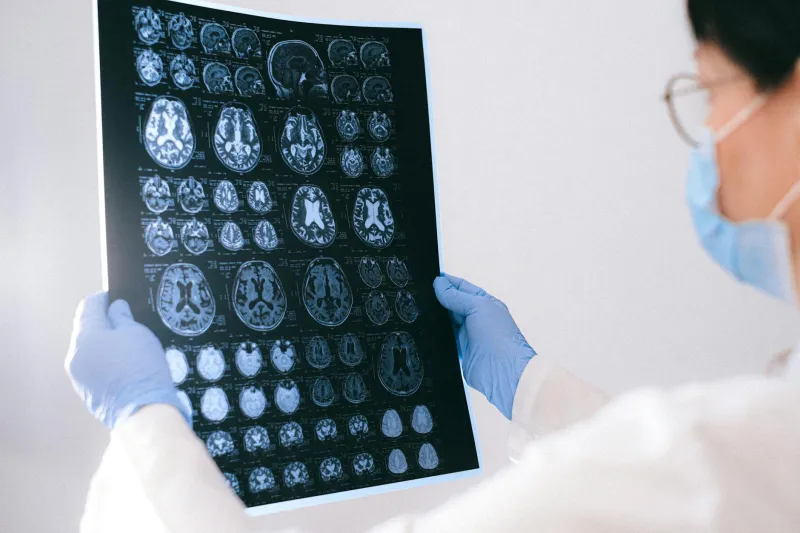
Modern brain imaging techniques like fMRI and PET scans reveal something fascinating: your brain is incredibly active, almost all the time. Even during what researchers call "rest," when you're not focused on any particular task, large networks of brain regions are buzzing with activity.
Think about it logically. Evolution doesn't tend to preserve massive, energy-hungry organs that are 90% deadweight. Your brain consumes about 20% of your body's total energy despite being only 2% of your body weight. That's like keeping a gas-guzzling SUV in your driveway that you only drive once a week — it makes no evolutionary sense.
Brain damage studies also contradict the 10% myth. Damage to virtually any part of the brain causes noticeable effects. If 90% of our brain tissue were truly unused, we'd expect large areas where damage would cause no symptoms at all. Instead, even small injuries can have significant impacts on thinking, movement, or personality.
Tracing the Origins of a Persistent Lie
So where did this stubborn myth begin? The trail leads back to the early 1900s and a case of scientific telephone gone wrong.
William James, the influential Harvard psychologist, wrote in 1906 that "we are making use of only a small part of our possible mental and physical resources." He wasn't talking about brain anatomy — he meant that people don't push themselves to achieve their full potential. But somewhere along the way, this motivational observation got twisted into a specific neurological claim.
The transformation likely happened through a combination of misquotes, oversimplifications, and wishful thinking. Self-help authors found the idea irresistible: imagine if you could tap into that unused 90%! Advertisers loved it too — it was the perfect setup for products promising to unlock your hidden mental powers.
By the 1930s, the specific "10%" figure had crystallized in popular culture, often attributed to Albert Einstein (who never said anything of the sort). The myth had found its perfect form: specific enough to sound scientific, attributed to a genius, and optimistic enough to make everyone feel better about their limitations.
Hollywood's Role in Keeping the Myth Alive
Modern entertainment has become the myth's life support system. Movies like "Lucy," "Limitless," and "The Lawnmower Man" have turned the 10% claim into blockbuster premises. These films don't just reference the myth — they build entire plots around it, complete with spectacular special effects showing what might happen if someone could access their "unused" brain power.
The appeal is obvious: it's a ready-made origin story for superpowers. Instead of getting bitten by a radioactive spider, characters just need to unlock their dormant neural potential. It's democratic — anyone could theoretically become a genius or develop psychic abilities.
But Hollywood's embrace of the myth has created a feedback loop. Each new movie reinforces the idea for millions of viewers, making it seem more credible and widespread. When a big-budget film treats something as scientific fact, audiences tend to believe it, even if the "science" is completely fabricated.
Why We Want to Believe We're Underachieving
The 10% myth's persistence isn't just about bad information — it's about psychology. The idea that we're dramatically underutilizing our potential is deeply appealing for several reasons.
First, it's optimistic. If you're only using 10% of your brain, then there's enormous room for improvement. Struggling with math? Learning a new language? Building better habits? Don't worry — you've got 90% more brainpower in reserve.
Second, it excuses current limitations. Not as smart as you'd like to be? That's not a reflection of your actual capacity — you just haven't figured out how to access the good stuff yet. It transforms personal shortcomings into temporary technical problems.
Finally, it feeds into our cultural obsession with optimization and life hacking. Americans especially love the idea that there's some simple trick or technique that could dramatically improve performance. The 10% myth suggests that ultimate self-improvement is just a matter of flipping the right switch.
The Real Story Is More Interesting
The truth about your brain is actually more remarkable than the myth. You're not leaving 90% of your neural capacity on the table — you're running a incredibly sophisticated biological computer that coordinates everything from your heartbeat to your deepest thoughts.
Your brain is constantly rewiring itself, forming new connections and strengthening existing ones based on your experiences. This neuroplasticity means you can indeed improve cognitive function, learn new skills, and even recover from certain types of brain injuries. You just don't need to access some hidden vault of unused neurons to do it.
The real limitation isn't that we only use 10% of our brains — it's that we often don't use our brains as effectively as we could. Better sleep, regular exercise, challenging mental activities, and stress management can all improve cognitive performance. But these improvements come from optimizing the brain you're already using, not unlocking some secret reserve.
The Takeaway
The next time someone tells you that humans only use 10% of their brains, you can confidently tell them they're wrong. We use virtually all of our brain, virtually all of the time. The myth persists because it's psychologically appealing and culturally reinforced, not because it has any basis in neuroscience.
The real message is more empowering anyway: you don't need to unlock hidden brain power because you're already running on the full system. The question isn't how to access more of your brain — it's how to make better use of the remarkable organ you've got.