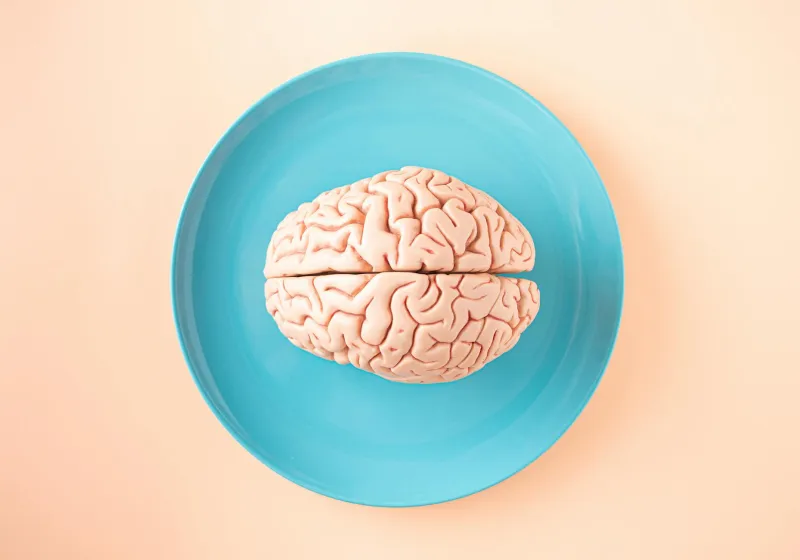
Your 'Creative Right Brain' Quiz Result Is Pure Fiction — Real Neuroscience Works Nothing Like This
If you've ever taken an online quiz that labeled you a "creative right-brain thinker" or attended a workshop about "left-brain analytical types," you're part of a massive cultural phenomenon built on neuroscience fiction. This personality framework has shaped how millions of Americans understand themselves, choose careers, and even organize their lives.
The problem? Modern brain research shows it's complete nonsense.
The Popular Myth Everyone Believes
The left-brain/right-brain personality theory claims your dominant hemisphere determines your thinking style. Left-brain people are supposedly logical, analytical, and good with numbers. Right-brain folks are creative, intuitive, and artistic. Countless books, workshops, and online quizzes have built empires around this idea.
Walk into any bookstore and you'll find titles like "Drawing on the Right Side of the Brain" or "Whole Brain Thinking." Corporate training programs still use this framework to categorize employees. Dating apps let you filter by "brain type." It's become so embedded in American culture that saying "I'm not a math person, I'm right-brained" feels like stating a biological fact.
What Brain Imaging Actually Shows
Here's what happens when neuroscientists actually look inside working brains: both hemispheres light up for virtually every mental task. Creative writing activates analytical regions. Mathematical problem-solving engages areas associated with imagination. Even simple tasks like recognizing a face or understanding a joke require seamless cooperation between both sides.
A 2013 University of Utah study analyzed brain scans from over 1,000 people aged 7 to 29. Researchers found no evidence that individuals use one hemisphere more than the other. The brain simply doesn't work in the compartmentalized way the personality theory suggests.
"It's one of the most persistent myths in popular psychology," says Dr. Jeff Anderson, the study's lead researcher. "We just don't see people who are more left-brained or right-brained than others."
The Nobel Prize Discovery That Started It All
So where did this idea come from? The story begins with legitimate, groundbreaking research by Roger Sperry, who won the 1981 Nobel Prize for studying "split-brain" patients.
These were people with severe epilepsy who had undergone a radical surgery: cutting the corpus callosum, the bundle of nerves connecting the brain's hemispheres. This procedure stopped seizures from spreading but created fascinating side effects. When researchers showed these patients an image only to their left eye (connected to the right hemisphere), they couldn't verbally describe what they'd seen because language centers are typically in the left hemisphere.
Sperry's work revealed that the hemispheres do have some specialized functions. The left side typically handles language and sequential processing. The right side often manages spatial relationships and pattern recognition. This was revolutionary neuroscience.
How Science Became Self-Help
But here's where things went sideways. Sperry's findings applied only to people with surgically severed brain connections — maybe a few hundred individuals worldwide. In healthy brains, the hemispheres constantly communicate through 200 million neural fibers.
Yet popular psychology seized on the hemisphere specialization concept and ran wild with it. The 1970s and 80s saw an explosion of books claiming you could identify your "brain type" and optimize your life accordingly. Betty Edwards' 1979 book "Drawing on the Right Side of the Brain" sold millions of copies. Workshops promised to unlock your "unused creative hemisphere."
The transformation was complete: careful scientific observations about brain-damaged patients became a personality typing system for everyone.
Why This Myth Refuses to Die
The left-brain/right-brain framework persists because it offers something irresistible: a simple explanation for complex human differences. It validates people who struggle with math ("I'm just right-brained!") and gives analytical types permission to avoid creative pursuits.
It also fits perfectly with American culture's love of binary categories and self-improvement systems. We want to understand ourselves, and "discover your brain type" feels more scientific than astrology but simpler than actual neuroscience.
Educational systems have embraced it too. Teachers design "right-brain friendly" lessons with colors and music, while "left-brain learners" get structured, sequential instruction. It sounds progressive, but it's based on fiction.
The Real Story Is More Interesting
Actual brain research reveals something far more fascinating than the left-brain/right-brain dichotomy: your brain is a collaborative network where creativity and logic dance together constantly. When you solve a math problem, you're using pattern recognition, spatial reasoning, and logical analysis simultaneously. When you write a poem, you're employing language structures, emotional processing, and analytical judgment all at once.
The most creative and successful people aren't those who've unlocked their "right brain" — they're those who've developed strong connections between different brain regions and cognitive skills.
The Bottom Line
Your quiz results might say you're a "right-brain creative," but your actual brain didn't get the memo. Both hemispheres are working together right now as you read this sentence, processing language, meaning, and context in ways that would make any computer jealous.
The real insight isn't about which side of your brain is dominant — it's that the whole thing is more interconnected and collaborative than we ever imagined. And that's actually way cooler than being stuck in a category.