Those Dates Stamped on Your Food Are Mostly Made Up — Here's What They Actually Mean
Those Dates Stamped on Your Food Are Mostly Made Up — Here's What They Actually Mean
Somewhere in your refrigerator right now, there is probably food you will throw away without tasting. You'll check the date on the package, notice it passed a day or two ago, and toss it — because that's what the label seems to be telling you to do. It feels responsible. It feels safe.
Here's the uncomfortable part: in most cases, that date has nothing to do with whether the food is safe to eat. And the system that produced that label was never designed to answer that question in the first place.
A Label System With No Federal Standard
This is the part that surprises people most: with the exception of infant formula, the federal government does not regulate expiration date labels on food. There is no law requiring most food manufacturers to print any date at all, and there is no standardized definition for what terms like "Best By," "Use By," or "Sell By" actually mean.
Every manufacturer sets its own dates, using its own methodology, for its own reasons. Some base them on internal quality testing. Some use conservative estimates designed to ensure the product is at peak flavor — not safety. Some are influenced by retailer relationships and supply chain logistics. The result is a patchwork of labels that look authoritative but carry no uniform meaning across products or brands.
The USDA and FDA have issued guidance on this, but guidance isn't regulation. The labels exist in a largely voluntary system, which means two identical products from two different manufacturers could carry dates weeks apart — and both could be perfectly accurate by their own internal standards.
What the Terms Actually Mean
Let's break down the three labels you see most often, because they genuinely do mean different things — just not the things most people assume.
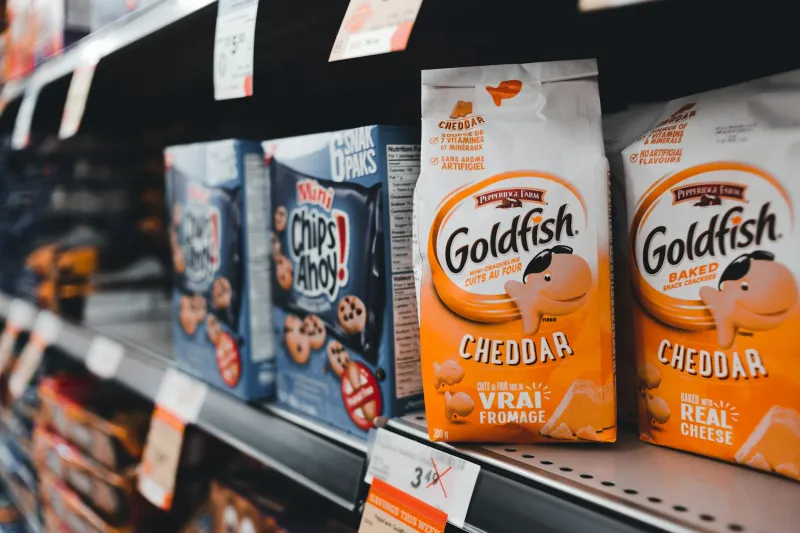
"Best By" or "Best If Used By" is a quality indicator. The manufacturer is suggesting that the product will taste, smell, or perform best before that date. After that date, quality may decline — a cracker might be slightly less crisp, a cereal slightly less crunchy — but the food is not necessarily unsafe. This is the most common label on shelf-stable products.
"Sell By" is a label aimed at retailers, not consumers. It tells the store how long to display the product for inventory management purposes. Food past its "Sell By" date is often still well within a reasonable window for home consumption. The USDA explicitly notes that consumers can use products after this date if stored properly.
"Use By" comes closest to a safety-oriented date and tends to appear on more perishable items. Even here, though, it's still largely a manufacturer's estimate, not a federal safety threshold. The FDA has actually moved toward encouraging the food industry to standardize on "Best If Used By" language to reduce consumer confusion — and food waste.
The Waste Problem Is Enormous
The consequences of this confusion aren't trivial. The Natural Resources Defense Council estimates that American households throw away somewhere between 25 and 40 percent of the food they buy. Date label misunderstanding is consistently cited as one of the primary drivers of that waste.
When you translate that into dollars, the numbers get striking. The average American family of four is estimated to throw away between $1,500 and $2,000 worth of food annually. Across the country, that adds up to roughly $165 billion in wasted food each year — much of it food that was still perfectly edible.
And the waste isn't just financial. Food that ends up in landfills generates methane as it decomposes, making it a meaningful contributor to greenhouse gas emissions. The environmental argument for understanding date labels turns out to be just as strong as the economic one.
How the Labels Became "Facts"
Date labels in the U.S. started appearing widely in the 1970s, driven partly by consumer advocacy and partly by retailer demand for inventory management tools. As they became ubiquitous, people naturally assumed they carried regulatory weight — why would a date be printed on food if it didn't mean something official?
The food industry didn't rush to correct that assumption. A product that appears to "expire" creates a purchase cycle. If consumers throw away a jar of peanut butter three days after its Best By date, they buy another jar sooner. The ambiguity in the labeling system, while not deliberately designed to deceive, has not been an economic problem for manufacturers.
Media coverage has reinforced the confusion by treating these dates as interchangeable safety thresholds. The phrase "expired food" shows up constantly in coverage that doesn't distinguish between a Best By date on a box of crackers and a genuine spoilage concern on raw poultry.
So When Is Food Actually Unsafe?
Your senses are more reliable than any printed date for most foods. Smell, texture, and visible mold are generally better indicators of spoilage than a stamp on the package. The USDA's FoodKeeper app offers specific storage guidance for hundreds of products and is a more practical reference than any label.
There are genuine exceptions. Raw meat, poultry, and seafood carry real safety timelines tied to bacterial growth, and those should be taken seriously regardless of what any label says. Soft cheeses, deli meats, and prepared foods with high moisture content also warrant more caution than, say, a box of pasta or a jar of honey.
For the vast majority of shelf-stable and refrigerated products, though, the date on the package is a quality estimate — not a safety deadline.
The takeaway: The date stamped on your food is almost certainly not what you think it is. It's not a federal safety standard, it's not consistent across brands, and in most cases it has more to do with peak flavor than actual spoilage risk. Learning the difference between these labels won't just save you money — it'll change how you think about food waste in a way that actually sticks.