That Goldfish in Your Kid's Room Isn't Brain-Dead — It Just Learned Your Feeding Schedule
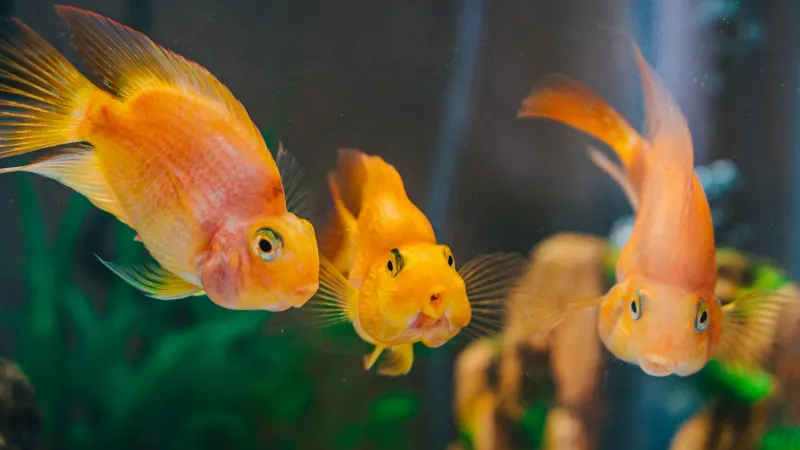
That Goldfish in Your Kid's Room Isn't Brain-Dead — It Just Learned Your Feeding Schedule
If you've ever felt guilty about keeping a goldfish in a small bowl, you might have consoled yourself with the thought that at least it won't remember being bored. After all, everyone knows goldfish have a memory span of just three seconds, right? They're essentially living in a constant state of amnesia, discovering their tiny world anew every few moments.
Except that's complete nonsense.
The Real Science Behind Goldfish Memory
Researchers have been studying goldfish cognition for decades, and the results consistently show these fish have memories that last for months, not seconds. In controlled laboratory experiments, goldfish have demonstrated the ability to:
- Remember feeding schedules and anticipate meal times
- Navigate complex mazes they've learned weeks earlier
- Recognize different human faces
- Distinguish between different pieces of classical music
- Learn to avoid areas where they've previously experienced mild electric shocks
One particularly impressive study from Plymouth University trained goldfish to play soccer. The fish learned to push a ball toward a goal to receive food rewards, and they retained this skill for months afterward. Another experiment showed goldfish could be trained to swim through hoops, remember the sequence of multiple hoops, and perform these tricks on command.
Perhaps most remarkably, goldfish have demonstrated what researchers call "time-place learning" — the ability to remember that food appears in different locations at different times of day. This is the same type of complex memory that helps wild animals remember when and where to find seasonal food sources.
Where the Three-Second Myth Actually Came From
The origin of the three-second memory myth is surprisingly hard to pin down, which should be the first red flag. Unlike many persistent myths that can be traced to a specific misunderstood study or misquoted expert, the goldfish memory story seems to have emerged from nowhere and everywhere at once.
Some researchers suspect it started as a way to make people feel better about keeping goldfish in small, barren bowls. If the fish can't remember being in a larger, more interesting environment, then there's no ethical problem with the tiny fishbowl, right? This reasoning conveniently ignores the fact that even if goldfish had three-second memories, they'd still experience stress, discomfort, and boredom in real-time.
The myth also fits neatly into our cultural tendency to rank animal intelligence in a hierarchy that conveniently places humans at the top and justifies how we treat other species. Fish, being cold-blooded and lacking obvious facial expressions, are easy targets for assumptions about limited intelligence.
Why We Keep Underestimating Animal Minds
The goldfish memory myth reveals something telling about human psychology: we're remarkably bad at recognizing intelligence that doesn't look like our own. We tend to assume that animals with smaller brains, different evolutionary paths, or unfamiliar behaviors must be less capable than they actually are.
This bias shows up everywhere in how we think about animals. For decades, scientists insisted that only humans used tools, until researchers observed chimpanzees fishing for termites with modified sticks. Then the definition shifted to "only humans make tools," until that was debunked too. The pattern repeats with language, self-recognition, problem-solving, and emotional complexity.
Goldfish suffer from an additional disadvantage: they live in an environment we can barely imagine. Their sensory world includes electrical fields, pressure changes, and chemical gradients that are invisible to us. When we can't easily relate to an animal's experience, we tend to assume there's not much experience there at all.
What This Means for Pet Owners
If you have a goldfish, this research has practical implications. Your fish is actively learning about its environment and forming memories about your behavior. It likely recognizes you as an individual and has learned your daily routine. This means:
- Goldfish benefit from environmental enrichment like plants, hiding spots, and varied decorations
- They can become stressed by sudden changes in their routine or environment
- They're capable of boredom and need mental stimulation
- Proper tank size and water quality matter for their psychological well-being, not just physical health
Many goldfish owners report that their fish seem excited when they approach the tank and appear to recognize different family members. This isn't anthropomorphic wishful thinking — it's consistent with what laboratory studies have shown about goldfish cognitive abilities.
The Bigger Picture
The goldfish memory myth is just one example of how casual "facts" about animals often say more about human assumptions than animal biology. These misconceptions matter because they shape how we treat other species and what we consider ethically acceptable.
When we assume an animal is essentially a biological robot with no meaningful inner life, it becomes much easier to justify poor treatment. When research reveals complex behaviors and long-term memory, suddenly the ethical calculus changes.
The Real Takeaway
Your goldfish isn't living in a three-second loop of perpetual confusion. It's a small but sophisticated animal with months-long memories, the ability to learn complex behaviors, and enough cognitive capacity to recognize your face and anticipate your daily routine.
The next time someone mentions the three-second goldfish memory "fact," you can let them know they're repeating a myth that has no basis in actual animal behavior research. And if you have a goldfish, maybe it's time to upgrade that bowl to something more worthy of an animal that will remember the improvement for months to come.