The Hand-Washing Habit You've Had Since Kindergarten Is Probably Not Working
The Hand-Washing Habit You've Had Since Kindergarten Is Probably Not Working
If someone asked you whether you know how to wash your hands, you'd probably laugh. Of course you do. You've been doing it since you were three feet tall and barely tall enough to reach the sink. And yet, study after study keeps arriving at the same uncomfortable conclusion: most people are doing it wrong — not dramatically wrong, but wrong in ways that matter when it comes to actually removing the bacteria and viruses that make us sick.
This isn't about being a germaphobe. It's about the gap between what we assume we're accomplishing and what's actually happening on a microscopic level. And that gap, it turns out, is surprisingly wide.
What Most People Actually Do
Research published in journals like the American Journal of Infection Control has observed real handwashing behavior in public restrooms and found some pretty discouraging patterns. A significant portion of people don't use soap at all. Among those who do, the average wash lasts somewhere between six and ten seconds. Many people skip drying their hands properly — or don't dry them at all — and head straight back into the world.
A Michigan State University study that observed over 3,700 people in restrooms found that only 5 percent washed their hands correctly by the researchers' standards. Five percent. That number is so low it almost sounds like a typo, but it held up across multiple observation periods.
So what does "correctly" actually mean here?
What the CDC Actually Says (That Most People Never Read)
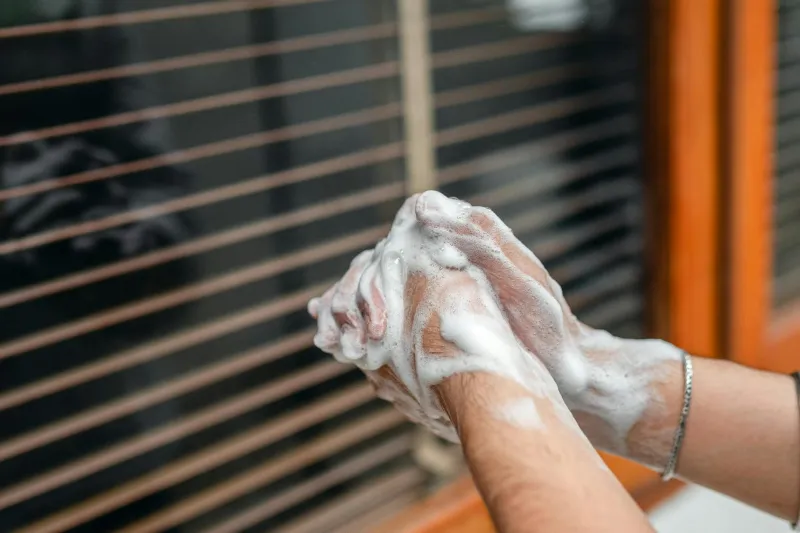
The CDC's handwashing guidelines are publicly available and surprisingly specific. The agency recommends lathering your hands — including the backs, between your fingers, and under your nails — for at least 20 seconds before rinsing. The "Happy Birthday" trick, where you sing the song twice in your head, is their actual suggested method for hitting that time mark.
Twenty seconds sounds short, but compared to how most people wash their hands, it's practically a meditation retreat. The under-nail area is especially important and almost universally skipped. Pathogens collect there readily, and a quick palm-to-palm scrub doesn't reach them.
Drying also matters more than people realize. Wet hands transfer bacteria far more easily than dry ones. Paper towels are generally more effective than air dryers, not because air dryers are useless, but because they take long enough that most people give up halfway through and leave with damp hands anyway.
The Hot Water Myth
Here's one that surprises almost everyone: water temperature probably doesn't matter as much as you think.
For decades, the assumption has been that hotter water kills more germs. It's intuitive — heat kills bacteria, so hot water must be doing more work than cold. But research has challenged this pretty directly. A Vanderbilt University study found that water temperature had no significant effect on microbial removal during handwashing. The friction from scrubbing and the surfactant action of soap are what actually dislodge pathogens from your skin. The water's job is mostly to carry them away.
This matters beyond just being a fun fact. A lot of people crank the water as hot as they can stand it, sometimes to the point of skin irritation. Chronically irritated, cracked skin actually harbors more bacteria, not less. So the hot-water habit might, in some cases, be making things marginally worse.
Where These Misconceptions Came From
Some of the confusion is just the natural result of simplified public health messaging. "Wash your hands" is easy to communicate. The 20-second rule, the scrubbing mechanics, the drying step — that's a lot harder to fit on a poster above a sink. So the nuance got stripped out, and what remained was a vague sense that any handwashing is good handwashing.
The hot water myth has older roots, likely tied to the general cultural association between heat and cleanliness — the same instinct that makes people think a scalding shower is more hygienic than a warm one. Once an idea like that gets baked into common sense, it tends to stick around long after the evidence has moved on.
Antibacterial soap is another area where popular belief outran the science. The FDA concluded in 2016 that certain antibacterial ingredients, like triclosan, were no more effective than regular soap for everyday handwashing — and potentially raised concerns about antibiotic resistance. Regular soap, used correctly, does the job.
The Part That Actually Makes a Difference
None of this is meant to be alarmist. Handwashing, even imperfect handwashing, is still one of the most effective public health tools we have. The CDC estimates it could prevent about 1 in 5 respiratory infections and a significant portion of foodborne illness cases.
But there's a meaningful difference between washing your hands and washing your hands well. The steps that most people skip — the duration, the nail beds, the thorough drying — are exactly the steps that separate a real reduction in pathogen load from a habit that mostly makes you feel clean.
The next time you're at the sink, try actually counting to 20. It'll feel longer than you expect. That's probably the most telling part of all this: the correct amount of time feels excessive to most of us, which is a pretty good sign of how far off our baseline really is.
The takeaway: Hot water doesn't give you an edge, antibacterial soap isn't the upgrade it sounds like, and the 20-second scrub — including under your nails and between your fingers — is the step that actually matters. It's one of those rare situations where doing something slightly more carefully costs almost nothing and makes a real difference.