The 20% Tip Wasn't Born From Gratitude — It Was Engineered by a Payment Screen
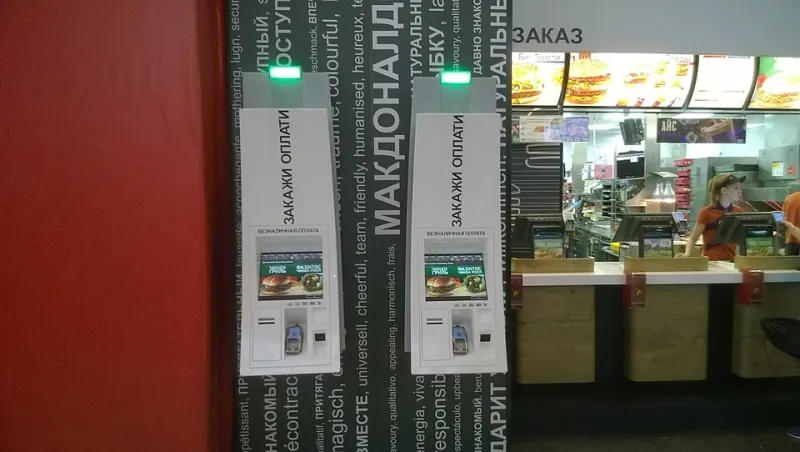
Photo: К.Артём.1, CC BY-SA 4.0, via Wikimedia Commons
The 20% Tip Wasn't Born From Gratitude — It Was Engineered by a Payment Screen
At some point in the last ten years, 20% became the floor. Not the generous tip. Not the "you really went above and beyond" tip. The floor. The baseline. The number you enter when the service was perfectly fine and you just want to leave.
If you're over 35, you probably remember when 15% was considered a solid, respectable tip for good service. If you're over 50, you might remember when 10% was the norm and 15% was generous. The number has been moving — steadily, quietly, and not by accident.
How the Baseline Moved Without Anyone Voting on It
Tipping in America has a complicated history, but the percentage creep of the last few decades is a relatively recent phenomenon with a surprisingly mechanical explanation.
For most of the 20th century, tipping was a cash transaction. You got the bill, you did some rough math, you left bills on the table. The social pressure existed, but the friction of mental math and physical cash created a natural ceiling. Most people weren't calculating 22% in their heads over dinner.
Then came credit cards. And with credit cards came the tip line on the receipt — a blank space where you wrote in a dollar amount. This was already a small psychological shift: you were now actively choosing a number rather than passively rounding up with whatever was in your pocket.
But the real inflection point came with the widespread adoption of point-of-sale tablet systems in the 2010s. Square, Toast, Clover — the touchscreen terminals that now face you at the end of nearly every restaurant meal, coffee shop visit, and food truck stop in America. These systems didn't just digitize the tip line. They suggested specific percentages, displayed as large buttons, pre-selected on the screen.
The Anchor You Never Agreed To
Behavioral economists have studied anchoring for decades. The basic finding is consistent: when people are shown a number before making a decision, that number pulls their final choice toward it — even when the number is arbitrary, even when the person knows it's arbitrary.
The tip screen is an anchoring machine.
When the default buttons on a payment terminal read 18%, 20%, and 25%, two things happen. First, the lowest suggested option becomes the psychological baseline. Choosing anything below it requires an active decision — pressing "custom amount," entering a lower number manually, and doing so while a line forms behind you and the server is standing nearby. The friction is real, and it's not accidental.
Second, the presence of a 25% button makes 20% feel moderate. This is classic anchoring: the high number makes the middle number look reasonable. When 15% isn't even offered as a button, it starts to feel like an insult.
Restaurant industry consultants and point-of-sale software designers are not naive about this effect. There is documented internal discussion in the hospitality tech space about which default percentages drive the highest average tip totals. The screens are tested. The numbers are chosen deliberately.
The Lobbying Layer Most People Don't Think About
Beyond the technology, there's a policy context worth understanding.
The federal tipped minimum wage — the base hourly rate employers are required to pay workers who receive tips — has been stuck at $2.13 per hour since 1991. That's not a typo. Thirty-plus years without a federal adjustment. Some states have raised their own tipped minimums significantly, but in many parts of the country, servers are legally paid a base wage that assumes tips will close the gap to the regular minimum wage.
The restaurant industry has spent considerable resources lobbying to keep that tipped minimum low, with the argument that tipping culture provides workers with earnings that exceed what a higher base wage would offer. That may be true in some cases. It also means the industry has a structural interest in tipping norms moving upward over time — because rising tip percentages allow restaurants to keep labor costs off their books and transfer them directly to customers.
None of this is hidden, exactly. But it rarely gets discussed when someone is standing at a payment terminal trying to decide between the 20% button and the awkward custom amount option.
What the Percentage Actually Buys
Here's the part that gets genuinely complicated. The tip percentage is calculated on the pre-tax bill total, which rises with food prices. As restaurant meal costs have climbed — driven by supply chain issues, real estate, and ingredient prices — the dollar value of a consistent percentage tip has grown automatically, even if the percentage itself never changed.
A 15% tip on a $40 dinner in 2005 was $6. A 20% tip on a $90 dinner in 2024 is $18. The percentage looks stable. The actual dollar transfer has tripled.
Meanwhile, the workers receiving those tips are navigating their own cost-of-living pressures — housing, healthcare, childcare — that have nothing to do with what percentage the payment terminal suggests. The relationship between the tip screen's default number and what a tipped worker actually needs to make rent is essentially zero. One is a product of software design decisions. The other is a function of local housing markets and wage structures.
So What Do You Do With This?
None of this is an argument for not tipping. In a system where tipped workers depend on gratuity to reach a living wage, opting out of tipping is opting out of paying the actual cost of your meal — you're just making someone else absorb it.
But being an informed tipper means understanding that the number on the screen was put there by someone who benefits from you pressing it without thinking. The "standard" of 20% is a recent, engineered norm — not a longstanding cultural agreement, not a response to improved service quality, and not a number that emerged from any conversation about what workers actually need.
The short version: The 20% tip standard wasn't driven by better service or inflation — it was shaped by payment terminal design, anchoring psychology, and an industry that benefits from keeping base wages low. The screen you're tapping was designed to move the number up. Now you know.