The Saying Everyone Knows Is Dead Wrong
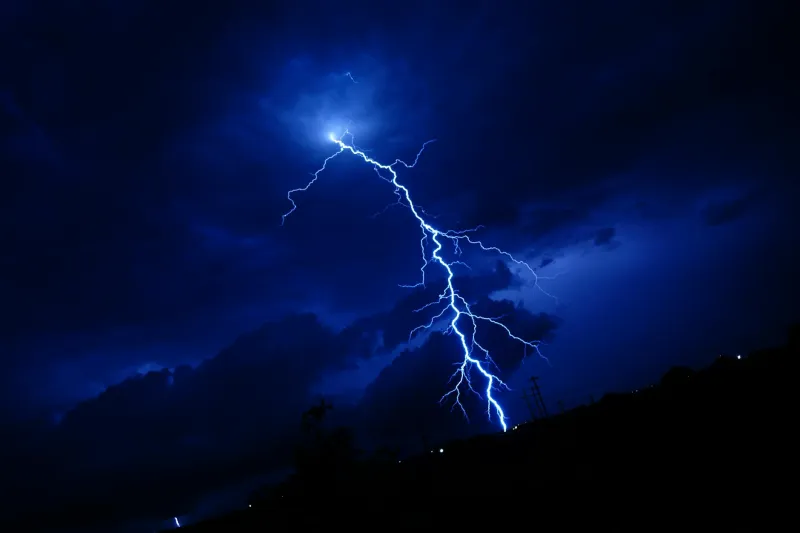
Ask any American about lightning, and they'll probably quote the old saying: "Lightning never strikes twice in the same place." It's one of those pieces of folk wisdom that sounds so authoritative, so final, that we rarely question it.
Except it's completely, demonstrably false.
The Empire State Building gets struck by lightning about 20-25 times every single year. During particularly active storm seasons, it can get hit multiple times in a single evening. There's even footage of the building getting struck three times in less than a minute.
Why Lightning Actually Loves Repeat Performances
The physics of lightning work in exactly the opposite way the saying suggests. Lightning follows the path of least electrical resistance to the ground — and that path doesn't magically change once a strike happens.
Tall structures like skyscrapers, cell towers, and mountain peaks create what meteorologists call "preferential strike zones." They're literally lightning magnets. The Empire State Building is 1,454 feet tall and sits in the middle of Manhattan's relatively flat landscape, making it an irresistible target for electrical discharge.
Roy Sullivan, a park ranger in Virginia, was struck by lightning seven different times between 1942 and 1977. His repeated encounters weren't cosmic bad luck — he worked outdoors in an area with frequent thunderstorms and lots of tall trees. The same environmental factors that led to his first strike were present for every subsequent one.
Where This Backwards Wisdom Came From
The phrase "lightning never strikes twice" wasn't originally meant to be taken literally. Like many old sayings, it started as a metaphor about probability and misfortune.
The idea was that extremely unlikely bad events — the kind that feel like being struck by lightning — don't typically happen to the same person repeatedly. It was meant to be comforting: if something terrible and random happened to you, the odds suggested you were probably safe from a repeat occurrence.
Somewhere along the way, Americans started treating the metaphor as a literal scientific fact about electrical storms. The saying jumped from "unlikely things don't usually repeat" to "lightning physically cannot strike the same location twice."
The Science Says the Opposite
Meteorologists have known for decades that lightning absolutely prefers certain locations. Golf courses see repeated strikes on the same trees and flagpoles. Baseball stadiums install lightning rods because they know specific spots will get hit year after year.
Lightning detection networks track millions of strikes annually, and the data shows clear patterns. Certain geographic areas — mountain ridges, lakeshores, isolated tall structures — see concentrated, repeated activity. Florida's Lightning Alley gets struck by the same storm systems following similar paths season after season.
The National Weather Service actually uses historical lightning data to predict where future strikes are most likely to occur. If lightning truly never struck twice, this forecasting method would be useless.
Digital Age, Ancient Myths
What makes this misconception particularly interesting is how it persists despite easy access to contradictory evidence. You can find time-lapse videos of the Empire State Building getting struck multiple times, detailed lightning maps showing repeat strike zones, and scientific papers explaining exactly why certain locations attract repeated hits.
Yet the phrase continues to circulate, especially in contexts where people are trying to reassure someone who's experienced bad luck. "Don't worry," they'll say, "lightning never strikes twice."
What the Saying Was Always Supposed to Mean
The original wisdom behind the phrase isn't entirely wrong — it just wasn't about actual lightning. Truly random, catastrophic events don't usually repeat for the same person. Getting struck by lightning while walking down a city sidewalk is genuinely unlikely to happen twice.
But the saying was never meant to be a meteorological fact. It was a psychological comfort tool, a way of saying that extraordinary bad luck doesn't typically compound.
The real takeaway? When someone uses this phrase to comfort you after something terrible happens, they're offering exactly the kind of reassurance the saying was designed to provide. They're just accidentally making a false claim about atmospheric electricity while they do it.
The Practical Reality
For anyone who spends time outdoors during storms, the truth about lightning is actually more useful than the myth. Lightning strikes follow predictable patterns based on geography, elevation, and conductivity. Understanding these patterns — rather than assuming lightning distributes itself randomly and never repeats — can help you make better decisions about where to take shelter.
The Empire State Building's 20+ annual strikes aren't freak accidents. They're physics in action, happening exactly where and when the science predicts they should.