The Military Proved Your Medicine Cabinet Is Lying to You
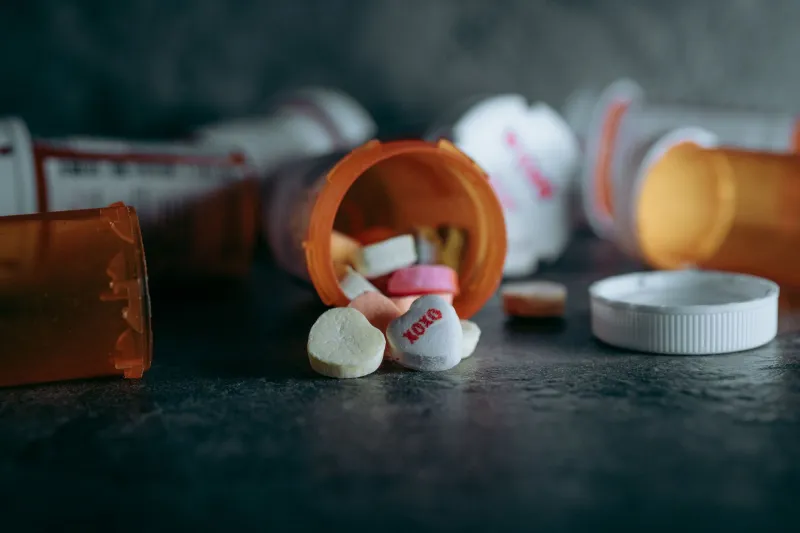
Every spring, millions of Americans do the same thing. They open the medicine cabinet, squint at the dates stamped on the bottom of pill bottles, and throw out anything that's expired. It feels responsible. It feels like the right call. The date is right there — surely it means something.
It does mean something. Just not what most people think.
Where Expiration Dates Actually Come From
Before 1979, medication bottles didn't carry expiration dates at all. That changed when the FDA introduced a regulation requiring pharmaceutical manufacturers to stamp a date on every drug they sold. The intent was reasonable: companies needed to guarantee that a drug remained at full potency up until that printed date, under proper storage conditions.
Notice what that means, though. The date is a guarantee floor, not a cliff. A manufacturer certifying that a drug is effective through December 2024 isn't saying it falls apart on January 1st, 2025. They're saying they tested it, they're confident it holds up until then, and beyond that point — they're not making any promises. That's a legal and liability distinction, not a pharmacological one.
The testing required to extend an expiration date costs money. Significant money. Running stability studies on a drug already on the market, for a product that's already selling, isn't something most manufacturers have much financial incentive to do. So they don't. And the date on your bottle reflects that business decision more than it reflects any chemical reality.
The Study That Changed What the Military Knew — But Not What You Were Told
In the late 1980s, the US military found itself sitting on an enormous stockpile of medications — antibiotics, pain relievers, antihistamines — worth hundreds of millions of dollars. As expiration dates rolled past, the question became: do we destroy all of this, or is there another option?
The FDA and the Department of Defense partnered on what became known as the Shelf Life Extension Program, or SLEP. Researchers tested over 100 different drug compounds from existing military stockpiles to determine whether they remained potent past their printed expiration dates.
 Photo: Department of Defense, via brandslogos.com
The results were striking. Roughly 90% of the medications tested were found to be fully effective — and in many cases, chemically stable — well beyond their expiration dates. Some remained potent 15 years after the date on the label. The program has since saved the military an estimated $2 billion by extending the life of stockpiled medications rather than replacing them.
This wasn't a fringe finding. It was published. It was government-funded. And it has been largely invisible to the American public ever since.
So Why Does the Myth Persist?
A few reasons, and none of them are entirely sinister — but they're worth understanding.
First, the pharmaceutical industry benefits from regular repurchase. That's not a conspiracy; it's just business. If consumers confidently held onto medications for years past the printed date, they'd buy less. The current system, where people discard and replace on a predictable schedule, works out well for manufacturers.
Second, the FDA's original regulation was never designed to communicate danger after the date — but consumers interpreted it that way. The word "expiration" carries heavy baggage. We expire. Food expires. Milk that's two days past the date smells like a mistake you made. The psychological transfer to medication was natural, even if it wasn't accurate.
Third, healthcare providers and pharmacists have historically defaulted to conservative guidance. When in doubt, replace it. That's defensible advice from a liability standpoint, and it's not wrong exactly — it's just incomplete.
What Actually Degrades, and What Doesn't
Not every medication behaves the same way over time, and that nuance matters.
Some drugs genuinely do degrade in ways that reduce effectiveness or, in rare cases, create breakdown products worth avoiding. Tetracycline antibiotics are the most commonly cited example — older formulations were linked to kidney issues when degraded, though modern formulations are considered far more stable. Liquid medications, particularly those requiring refrigeration, are more vulnerable to time and temperature than solid tablets. Nitroglycerin, used for heart conditions, is notoriously sensitive to storage conditions.
But the bulk of what sits in a typical American medicine cabinet — ibuprofen, acetaminophen, antihistamines, most prescription tablets — tends to hold up remarkably well when stored properly. "Properly" means cool, dry, and dark, which rules out the bathroom medicine cabinet for a lot of people, since bathroom humidity is genuinely hard on medications. The bedside drawer or a kitchen cabinet away from the stove is actually a better bet.
The takeaway isn't "ignore all expiration dates forever." It's that the date is a starting point for a more informed conversation, not the final word.
What This Means for Your Everyday Decisions
If you're managing a chronic condition, take a medication that's narrow in its dosing window, or are dealing with something serious, this probably isn't the moment to experiment with a bottle from 2019. Talk to your pharmacist — they're genuinely underused as a resource and can often give you a straight answer about specific drugs.
But if you're staring at a bottle of ibuprofen that expired eight months ago and wondering whether to take it for a headache? The evidence suggests you're probably fine. The pill isn't going to hurt you. It might be marginally less potent than it was. That's a far cry from dangerous.
The broader lesson here is one Commonly Wrong returns to pretty often: dates, labels, and rules that look like science are sometimes science, and sometimes they're liability management dressed up in authoritative packaging. Knowing the difference is worth the extra five minutes.
The short version: The expiration date on your medication tells you when the manufacturer stops guaranteeing full potency — not when the drug becomes useless or harmful. A landmark military study found most drugs stay effective for years beyond that date. The system exists because of a 1979 FDA regulation, not because drugs suddenly fail on a specific calendar day.