Salem's Witch Trials Weren't Really About Witches — The Truth Is Much Stranger

The Story Everyone Learned in School
Most Americans learned that the Salem Witch Trials of 1692-1693 happened because Puritan religious extremism spiraled out of control. Hysterical teenage girls accused innocent people of witchcraft, and a paranoid community executed 20 people before coming to their senses. It's a tidy morality tale about the dangers of superstition and mob mentality.
But historians who've spent decades digging through court records, land deeds, and family genealogies tell a much more complicated story. The religious explanation is part of it, but it's missing some crucial pieces that make the whole episode far weirder — and more unsettling.
The Fungus Theory That Changes Everything
In 1976, a graduate student named Linnda Caporael proposed something that sounded like science fiction: what if the Salem accusers were literally hallucinating? She'd noticed that the symptoms described in court documents — convulsions, crawling sensations, visions — matched perfectly with ergot poisoning.
 Photo: Linnda Caporael, via 1.bp.blogspot.com
Ergot is a fungus that grows on rye grain, especially in wet conditions. When consumed, it produces effects similar to LSD. The winter before the trials was unusually wet, perfect for ergot growth. The accusers lived in the swampy western part of Salem Village, where rye was a dietary staple. Their symptoms appeared and disappeared in patterns that matched seasonal ergot exposure.
 Photo: Salem Village, via cdn.slidesharecdn.com
The theory isn't universally accepted, but it explains some puzzling details. Why did the accusations cluster in specific families and neighborhoods? Why did symptoms seem to come and go? Why did the whole episode end so abruptly?
The Land Wars Nobody Talks About
Even without hallucinogenic bread, Salem Village was a powder keg. The community was split by a bitter dispute over whether to separate from Salem Town and form an independent church. This wasn't just about religion — it was about money, political control, and who got to make decisions.
The Putnam family led the pro-independence faction and filed most of the witchcraft accusations. Their primary targets? Members of families who opposed independence, particularly those with valuable land or successful businesses. Rebecca Nurse, one of the executed, owned prime farmland that several neighbors had been eyeing for years.
Court records show that accusers and accused lived in distinctly different parts of the village, with clear geographic patterns that mapped onto existing political and economic divisions. The witch trials became a way to settle scores that had nothing to do with supernatural beliefs.
When Multiple Crises Hit at Once
Salem Village in 1692 was dealing with more than religious tensions and possible ergot poisoning. King Philip's War had ended just 16 years earlier, leaving the community traumatized and economically unstable. Smallpox outbreaks were common. The colonial government was in chaos following the overthrow of the Dominion of New England.
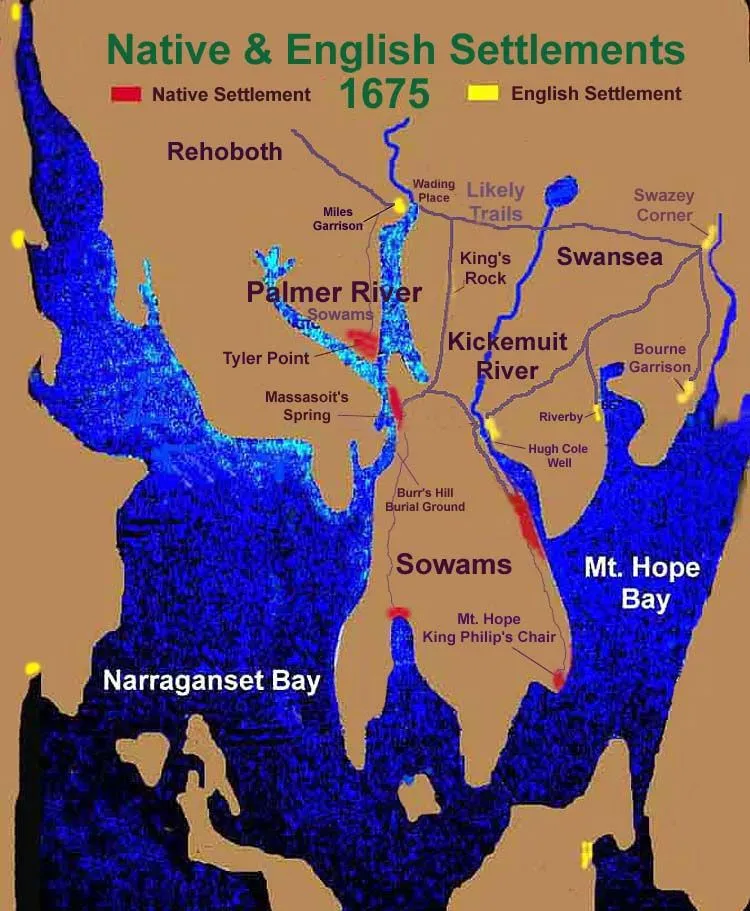 Photo: King Philip's War, via i.pinimg.com
Add in harsh winter weather, crop failures, and ongoing disputes with Native American tribes, and you have a community under enormous stress. The witch trials weren't caused by any single factor — they were the result of multiple pressures creating a perfect storm.
Why the Simple Explanation Stuck
The "religious hysteria" explanation became popular because it's easy to understand and fits our modern assumptions about the past. It lets us feel superior to our ancestors while avoiding the uncomfortable reality that communities can collapse for complex, interconnected reasons that aren't always obvious at the time.
The real Salem story is messier and more relevant to modern life. It shows how economic inequality, political polarization, environmental stress, and social isolation can combine in dangerous ways. It demonstrates how quickly neighbors can turn against each other when trust breaks down.
What Salem Really Teaches Us
The Salem Witch Trials weren't a simple case of superstition run amok. They were what happens when a community faces multiple crises simultaneously and loses the social mechanisms needed to resolve conflict peacefully. Understanding this complexity doesn't excuse what happened, but it helps explain how ordinary people can participate in extraordinary cruelty.
The next time you hear someone confidently explain a historical event with a single cause, remember Salem. The truth is usually more complicated, more interesting, and more relevant than the version that fits neatly into a textbook chapter.