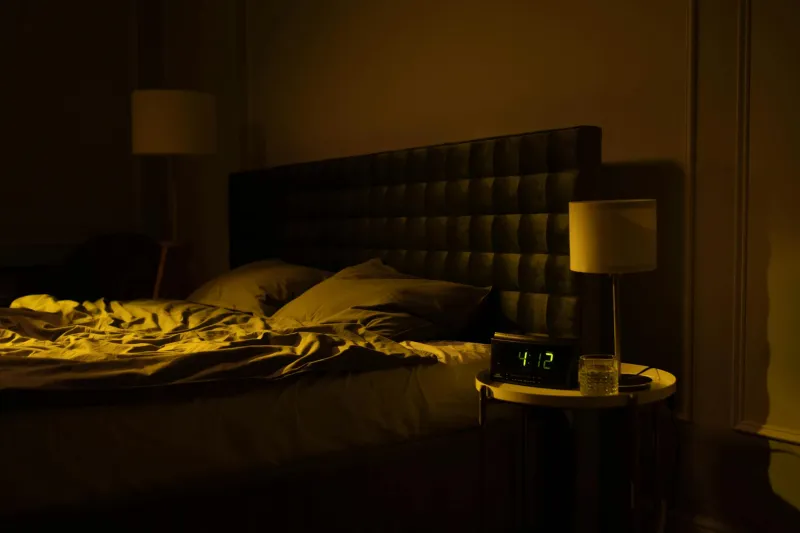
The 3 AM Wake-Up Call Isn't Modern Stress
If you've ever jolted awake at 3 AM and felt like something was wrong with you, here's a surprising fact: you might be experiencing one of humanity's most natural sleep patterns. What we now label as "middle insomnia" or "sleep maintenance disorder" was actually the standard way people slept for most of human history.
When Sleep Came in Two Acts
Historical documents from across Europe, Africa, and Asia describe something called "segmented sleep" or "bi-modal sleep." People would go to bed shortly after sunset, sleep for about four hours, then wake up for one to three hours of quiet activity before falling back asleep until dawn.
This wasn't considered a sleep problem—it was just sleep. Medieval prayer books included special prayers for the middle-of-the-night wakeful period. Literature from the 1600s casually mentions conversations, household tasks, and even social visits that happened during what they called "the watch."
Roger Ekirch, a historian at Virginia Tech, spent years combing through historical records and found over 500 references to segmented sleep patterns. Court records mention crimes committed during "first sleep" versus "second sleep." Medical texts gave advice for the wakeful hours between sleep periods.
The Industrial Revolution Changed Everything
So what happened? The same thing that disrupted most traditional human rhythms: artificial lighting and industrial schedules.
As gas lighting and later electric lights became common in the 1800s, people started staying awake later into the evening. Factory work demanded consistent schedules that didn't accommodate natural sleep variations. Urban living meant neighbors—and noise—at all hours.
Most importantly, the idea of "efficient" sleep became popular. Why waste time being awake in the middle of the night when you could compress all your sleep into one neat eight-hour block?
Medical Science Caught Up Late
By the time sleep medicine became a formal field in the 20th century, segmented sleep had already disappeared from most Western societies. When doctors started studying "normal" sleep, they were actually studying the sleep patterns of people who had already adapted to artificial lighting and industrial schedules.
This created a circular problem: medical textbooks defined continuous sleep as normal because that's what most patients experienced, which reinforced the idea that waking up at night was abnormal.
Your Body Might Be Trying to Tell You Something
Modern sleep studies have found that when people are isolated from artificial light for extended periods, many naturally return to segmented sleep patterns. Their bodies seem to remember this older rhythm.
The wakeful period between sleep sessions isn't random—it often coincides with natural changes in body temperature and hormone levels. Some researchers suggest this middle-of-the-night consciousness served evolutionary purposes, like monitoring for dangers or tending to infants.
Why This Matters for Your Sleep Anxiety
If you regularly wake up in the middle of the night and feel alert for 30 minutes to an hour before getting sleepy again, you might not have insomnia. You might just have a sleep pattern that would have been completely normal 200 years ago.
The key difference is how you respond to it. Historical accounts suggest people used this time for quiet, restful activities—prayer, meditation, reading, or gentle conversation. They didn't panic about lost sleep or stare at clocks calculating how tired they'd be the next day.
The Modern Sleep Pressure Problem
Today's sleep advice often creates more anxiety than it solves. We're told that any deviation from eight straight hours means something's wrong, which can turn a natural wakeful period into a stress-filled battle with insomnia.
Some sleep specialists now recommend that people who experience regular middle-of-the-night wakefulness try embracing it instead of fighting it. Keep the lights dim, do something calm and non-stimulating, and return to bed when sleepiness returns.
The Bottom Line
Your 3 AM wake-up might not be a bug in your sleep system—it could be a feature that's been around for millennia. While continuous sleep works well for modern schedules, it's worth remembering that the human body evolved long before alarm clocks and morning commutes.
The next time you find yourself naturally awake in the small hours, consider that you're experiencing something your ancestors would have found completely unremarkable. Sometimes the "problem" isn't your sleep—it's our assumptions about what sleep should look like.