The Kitchen Habit That Makes Raw Chicken More Dangerous — Yet 90% of Home Cooks Still Do It
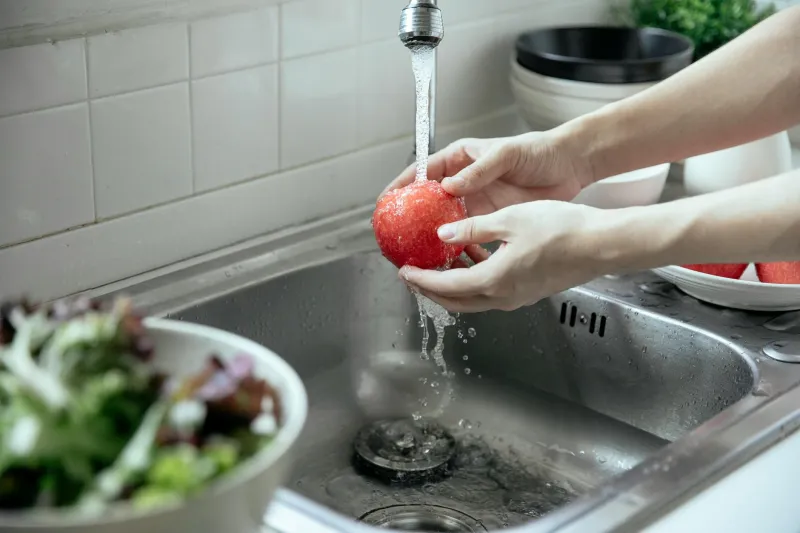
Walk into any American kitchen during dinner prep, and you'll likely witness one of our most persistent food safety mistakes: someone standing at the sink, carefully rinsing raw chicken under running water.
This ritual feels so obviously correct that questioning it seems absurd. Raw meat looks slimy and unappetizing straight from the package. Surely washing it makes the chicken cleaner and safer to eat, right?
Wrong. And not just a little wrong — dangerously wrong.
The Splash Zone You Can't See
When you rinse raw chicken under the faucet, you're not washing bacteria away. You're launching them on a microscopic tour of your kitchen.
Water hitting raw poultry creates what food scientists call "aerosolization" — tiny droplets containing bacteria like Salmonella and Campylobacter become airborne and land on surfaces up to three feet away from your sink. Your countertops, dish towels, cutting boards, and even that clean plate sitting nearby all become contaminated.
The USDA has conducted multiple studies using special cameras and fluorescent markers to track this bacterial spread. The results are startling: washing chicken contaminated an average of 26% of nearby lettuce samples and 23% of spice containers in test kitchens.
Yet the bacteria you're trying to wash off? They're still right there on the chicken, clinging to the meat's surface. Running water doesn't remove them — it just relocates them.
The Only Thing That Actually Kills Bacteria
Here's what food safety experts have been trying to tell us: cooking temperature is the only thing that matters for chicken safety.
Salmonella, Campylobacter, and other harmful bacteria die instantly when chicken reaches 165°F internal temperature. It doesn't matter if the raw meat looked clean or dirty, slimy or fresh. Proper cooking kills everything dangerous, while improper cooking leaves you vulnerable regardless of how thoroughly you rinsed.
This isn't new science. Food safety researchers have understood this for decades, yet surveys consistently show that 67% to 90% of American home cooks still wash their raw poultry.
How This Became Kitchen Gospel
So why does nearly everyone do something that makes chicken less safe?
The practice has deep cultural roots. For generations, washing meat was practical necessity. Before reliable refrigeration and modern food safety standards, rinsing could remove visible dirt, blood, or spoilage. Our grandmothers washed chicken because it often needed washing.
Many cooking traditions from around the world include meat-washing steps that made sense in their original context but persist today out of habit. Caribbean, Latin American, and Southern American cuisines all have traditional chicken preparation methods that include thorough rinsing.
The visual element reinforces the behavior. Raw chicken often has residual blood or looks unappetizingly slimy. Rinsing makes it look cleaner, which feels safer even though appearance has nothing to do with bacterial contamination.
The Celebrity Chef Problem
Popular cooking shows and celebrity chefs bear some responsibility for perpetuating this myth. Many high-profile cooks still demonstrate chicken washing on television, lending authority to a practice that food scientists oppose.
When viewers see professional chefs rinsing poultry, the behavior seems validated. After all, if Gordon Ramsay or your favorite Food Network star does it, it must be correct.
Cookbooks compound the problem. Many recipes still include "rinse and pat dry" as step one for chicken preparation, despite mounting evidence against the practice.
What Food Safety Experts Actually Recommend
The CDC, USDA, and every major food safety organization offer the same advice: don't wash raw chicken. Instead:
Remove chicken directly from packaging to your cutting board or cooking vessel. If you're concerned about the appearance, pat it dry with paper towels (which you'll immediately discard).
Focus on preventing cross-contamination through proper handling: use separate cutting boards for raw meat, wash your hands thoroughly after handling poultry, and clean any surfaces that touched raw chicken with hot, soapy water.
Use a meat thermometer to ensure chicken reaches 165°F internal temperature. This is your only reliable safety measure.
The Takeaway That Might Save Your Family From Food Poisoning
The next time you unwrap raw chicken, resist the urge to rinse it. That slimy appearance isn't a sign of contamination you can wash away — it's just how raw poultry looks.
Instead, channel your food safety energy into proper cooking and cleanup. Your family will be significantly safer eating "unwashed" chicken cooked to proper temperature than "clean" chicken that spread bacteria across your entire kitchen during preparation.
Sometimes the thing that feels obviously right is exactly what we shouldn't be doing. This kitchen habit is a perfect example of how common sense can be commonly wrong.