The Calorie Number on That Label Was Calculated by Setting Food on Fire — And Scientists Have Questions
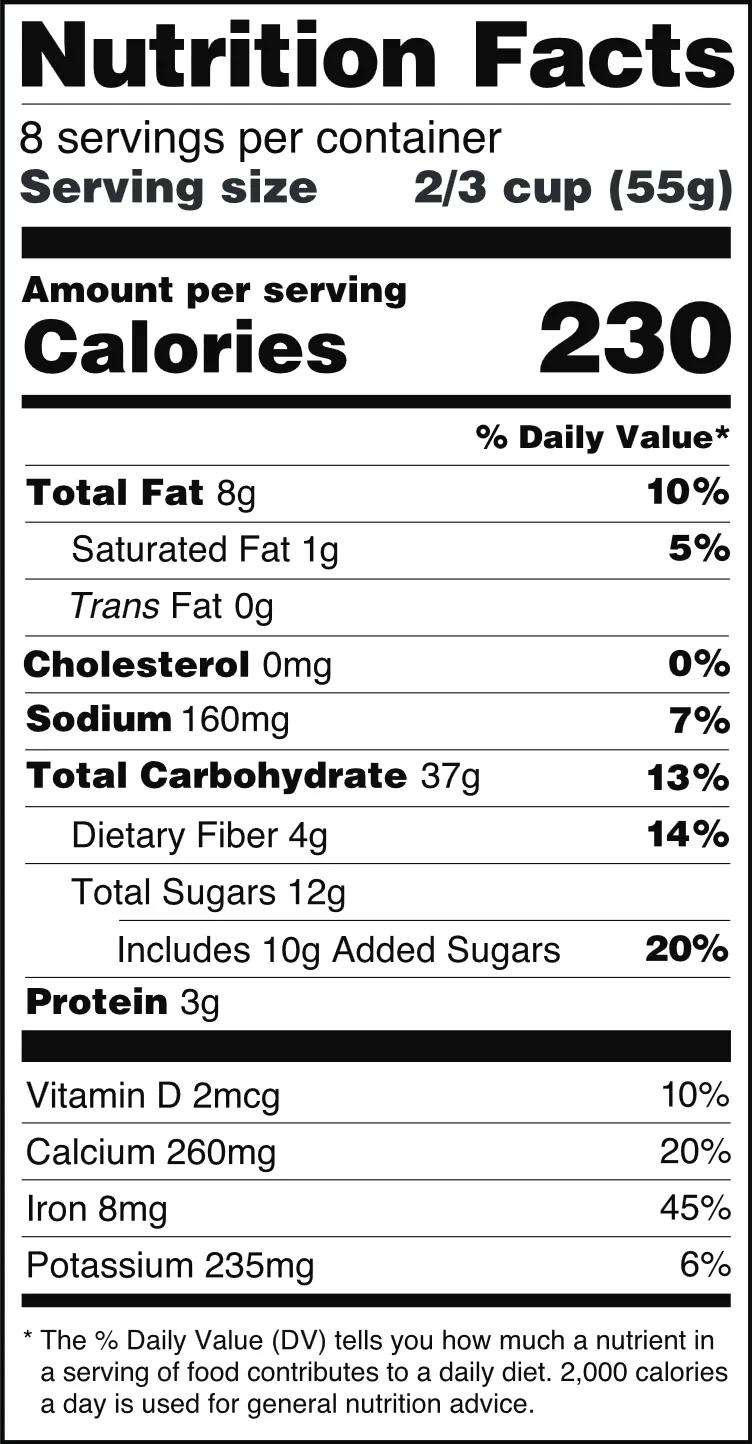
Photo: U.S. Food and Drug Administration, Public domain, via Wikimedia Commons
You've probably spent more time looking at calorie counts than you'd like to admit. On cereal boxes, restaurant menus, coffee cup sleeves. The number is right there, precise and confident, as if someone measured it very carefully and the result is settled science.
Here's what that number actually represents: the amount of heat released when a small sample of your food is literally incinerated inside a sealed metal chamber called a bomb calorimeter. The heat warms the water surrounding the chamber, and the temperature change tells researchers how much energy the food contains.
That measurement is then printed on your yogurt cup and used to guide some of the most consequential health decisions millions of Americans make every day. And the system doing that measuring is over a hundred years old, developed before anyone fully understood how digestion works.
A Brief History of Burning Your Lunch
The foundational work on food energy measurement was done by Wilbur Atwater, an American chemist who spent the 1880s and 1890s running extraordinarily detailed experiments on human metabolism. Atwater wasn't careless — he was doing serious science for his era. He developed a set of general calorie values for protein, fat, and carbohydrates that became known as the Atwater system, and those values form the backbone of virtually every nutrition label you've ever read.
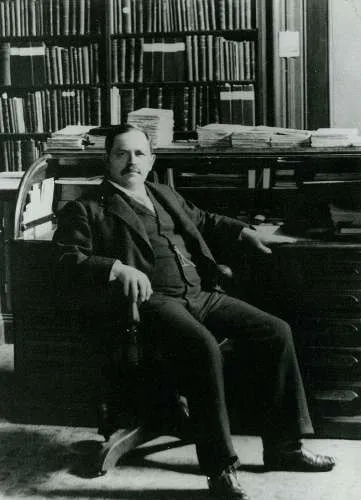 Photo: Wilbur Atwater, via newenglandhistoricalsociety.com
Atwater's approach was to measure the gross energy in food by burning it, subtract what came out the other end (literally — he analyzed waste), and estimate what the body actually absorbed. It was meticulous work by nineteenth-century standards. The problem is that those standards had limits, and we've been running the same calculation ever since.
The FDA still relies on a modified version of the Atwater system for food labeling in the United States. The core logic hasn't been fundamentally overhauled. Your 200-calorie granola bar was calculated using a framework that predates the discovery of DNA by about sixty years.
Why Two Foods With the Same Calorie Count Don't Hit Your Body the Same Way
The bomb calorimeter doesn't care about digestion. It just measures total combustible energy. But your digestive system is not a furnace — it's a complicated, variable, bacteria-filled process that extracts different amounts of energy from different foods depending on a remarkable number of factors.
Fiber is the obvious example. Calories from fiber are listed on nutrition labels, but most of it passes through the body without being absorbed. The Atwater system has always handled this imperfectly, and researchers have documented that high-fiber foods deliver meaningfully fewer usable calories than their labels suggest.
Nuts are another well-studied case. Almonds, for example, have a listed calorie count based on their total fat and protein content, but studies have found that the body actually absorbs significantly fewer calories from whole almonds than from almond butter — because the cellular structure of the whole nut resists digestion. The physical form of the food matters. The calorimeter doesn't know that.
Cooking also changes things. Cooked starches are more digestible than raw ones, which means a cup of cooked rice delivers more usable energy than a cup of raw rice with the same listed calorie count. The label doesn't reflect that distinction.
And then there's the gut microbiome — the ecosystem of bacteria living in your digestive tract that helps process what you eat. Research over the past two decades has made clear that different people extract different amounts of energy from the same foods depending on their individual microbial populations. Two people can eat identical meals and absorb meaningfully different amounts of energy. The label carries a single number for both of them.
Why the System Hasn't Changed
If nutrition scientists have been raising these questions for decades — and they have, in peer-reviewed journals going back to at least the 1990s — why does the bomb calorimeter method still run the show?
The honest answer involves a mix of regulatory inertia, practical limitations, and the enormous cost of change. Redesigning food labeling in the United States would require the FDA to establish a new standard, food manufacturers to recalculate and reprint labels for hundreds of thousands of products, and consumers to learn a new system. That's a massive undertaking, and the existing system — while imperfect — gives a rough approximation that's consistent across products.
Consistency has real value even when precision is lacking. If every food label uses the same flawed method, at least you can compare one product to another on equal terms. A switch to more accurate but more complex measurements might actually make comparisons harder.
There's also the uncomfortable reality that calorie counting as a weight management strategy has a complicated relationship with actual outcomes. If the numbers were more accurate but more variable and harder to track, the public health messaging around them would get significantly messier.
What This Actually Means for You
None of this means calorie counts are useless. They're a rough guide, and rough guides have value. A 600-calorie meal is probably more energy-dense than a 200-calorie meal, even if neither number is perfectly precise.
But the confident exactness of the number — 347 calories, printed right there — implies a level of precision the underlying science doesn't support. The difference between eating 2,000 calories of processed food and 2,000 calories of whole vegetables isn't captured anywhere on either label. The way your body processes those foods is different enough that the matching numbers can actually be misleading.
Nutrition researchers increasingly talk about food quality, satiety, metabolic response, and microbiome interaction — none of which the calorie count addresses. The number on the label tells you something. It just doesn't tell you everything it looks like it does.