Reading in the Dark Won't Ruin Your Eyes — That Warning Came From Parents Who Just Wanted Bedtime to Stick
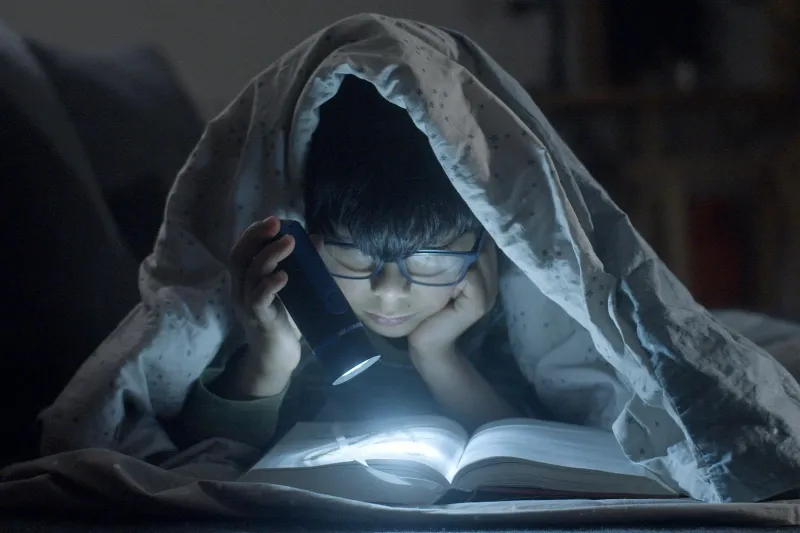
"You'll ruin your eyes reading in the dark like that!"
If you grew up in America, you've heard this warning. Maybe you believed it. Maybe you still do. The idea that reading in dim light causes permanent eye damage is so widespread that questioning it feels almost reckless.
But ophthalmologists have been saying the same thing for decades: reading in low light might make your eyes feel tired, but it won't cause lasting harm. So where did this persistent myth come from, and why do we still believe it?
What Eye Doctors Actually Say
The medical consensus on reading in dim light is remarkably clear and has been for years. Dr. Rachel Bishop of the National Eye Institute puts it simply: "There is no evidence that reading in dim light damages your eyes."
 Photo: National Eye Institute, via vectorseek.com
The American Academy of Ophthalmology agrees. Their official position is that while reading in poor lighting can cause eye strain, it doesn't cause permanent damage to your vision or eye structure.
Eye strain feels uncomfortable — your eyes might feel dry, tired, or achy after reading in low light for extended periods. You might blink less, which can make your eyes feel gritty. But strain isn't damage. It's temporary discomfort that goes away when you rest your eyes or improve the lighting.
Think of it like using your muscles. Running a marathon makes your legs sore, but that soreness isn't permanent damage to your muscles. Eye strain from reading in dim light works the same way.
The Parental Origin Story
So if eye doctors have been clear about this for decades, where did the "you'll ruin your eyes" warning come from?
The most likely answer is practical parenting, not medical advice.
Before electric lighting became common, reading by candlelight or oil lamps was genuinely difficult and potentially dangerous — not because of eye damage, but because of fire risk and the expense of fuel. Parents had good reasons to discourage nighttime reading that had nothing to do with vision.
As electric lighting spread, the warning evolved but stuck around. Parents discovered that the threat of permanent eye damage was much more effective at getting kids to put down books and go to sleep than "because I said so" or "you need your rest."
The warning also tapped into broader anxieties about children's health and development. In an era when medical knowledge was less accessible, parents erred on the side of caution. If reading in dim light might possibly cause problems, why risk it?
How the Myth Became Medical "Fact"
The leap from parental warning to accepted medical wisdom happened gradually, through repetition rather than research.
Teachers reinforced the message in schools. Librarians mentioned it when kids squinted at books. Eye care professionals, focused on more serious vision problems, didn't spend much time debunking what seemed like harmless overcaution.
The myth also aligned with other health advice that did have merit. Good lighting does make reading more comfortable and efficient. Proper posture while reading does matter for overall comfort. The dim light warning got bundled with genuinely helpful advice, making it harder to separate fact from fiction.
By the mid-20th century, "don't read in the dark or you'll ruin your eyes" had become one of those things "everyone knows" — passed down from parent to child without anyone questioning the original source.
Why Eye Strain Feels So Convincing
Part of the reason this myth persists is that eye strain from reading in poor light feels significant when it happens.
When you read in dim lighting, several things occur:
- Your pupils dilate to let in more light, which reduces depth of field and can make focusing harder
- You blink less frequently, which can make your eyes feel dry
- You might unconsciously squint or tense facial muscles, leading to headaches
- You may lean closer to the text, creating neck and shoulder tension
These symptoms feel real and uncomfortable because they are real and uncomfortable. But discomfort isn't the same as damage, even though our brains often interpret physical discomfort as a warning of harm.
The Screens Complicate Everything
The rise of digital screens has given new life to old fears about vision and lighting.
"Blue light" concerns, "digital eye strain," and warnings about screen time often get mixed up with traditional advice about reading in dim light. The result is a confusing landscape where some vision concerns are legitimate (like the need to blink more when looking at screens) while others are overblown (like the idea that blue light from devices is dangerous).
This confusion makes it even harder to separate evidence-based eye care advice from persistent myths.
What Actually Protects Your Vision
If you want to take care of your eyes, focus on things that actually matter:
- Get regular eye exams to catch problems early
- Wear sunglasses to protect against UV damage
- Take breaks when doing close-up work (the 20-20-20 rule: every 20 minutes, look at something 20 feet away for 20 seconds)
- Don't smoke — it significantly increases the risk of serious eye diseases
- Manage conditions like diabetes that can affect vision
Good lighting makes reading more comfortable and efficient, but it's about comfort, not preventing damage.
The Bigger Picture
The "reading in dim light ruins your eyes" myth is a perfect example of how health warnings can outlive their original context and take on a life of their own.
What started as practical parenting advice became accepted medical wisdom through repetition, not research. The myth persists because it feels intuitively true — surely straining your eyes must be bad for them — and because questioning it seems risky.
But sometimes the safest thing you can do is question advice that "everyone knows" is true. Your eyes are tougher than you think, and your parents' bedtime warnings, while well-intentioned, weren't based on medical science.
So go ahead and read in whatever lighting feels comfortable. Your eyes will be fine, even if your sleep schedule suffers.