When Someone Tells You Your English Is Wrong, They Usually Mean Something Else Entirely

Photo: Simon Burchell, CC BY-SA 4.0, via Wikimedia Commons
At some point in most American childhoods, someone corrects your English. Maybe a teacher circles a sentence on a paper. Maybe a relative gently points out that "ain't isn't a word." Maybe you learn to stop dropping the g in "talking" around certain people. The lesson, delivered one way or another, is that there is a correct version of English — and you should be speaking it.
Linguists find this fascinating. Not because the rules don't exist, but because the rules were made up relatively recently, enforced inconsistently, and have always tracked social class and regional identity at least as closely as anything you'd call grammar.
Grammar Rules Have a History — and It's Not Ancient
The idea that English has a single correct form, governed by fixed rules that educated people follow and uneducated people violate, is largely a product of the 18th century. Before that, written English varied enormously. Shakespeare used double negatives constantly — "I never said nothing" — and nobody in his audience thought he was being imprecise. Chaucer did it too. So did the King James Bible translators.
 Photo: King James Bible, via www.kjvbibles.com
 Photo: Shakespeare, via c8.alamy.com
What changed was a combination of printing, nationalism, and social anxiety. As England developed a larger literate middle class, there was growing pressure to standardize written language — partly for practical reasons, and partly because a standardized language could serve as a marker of education and refinement. A handful of influential grammarians, most notably Robert Lowth in 1762, sat down and wrote rules for English — often modeled on Latin, which was considered the gold standard of logical, civilized language.
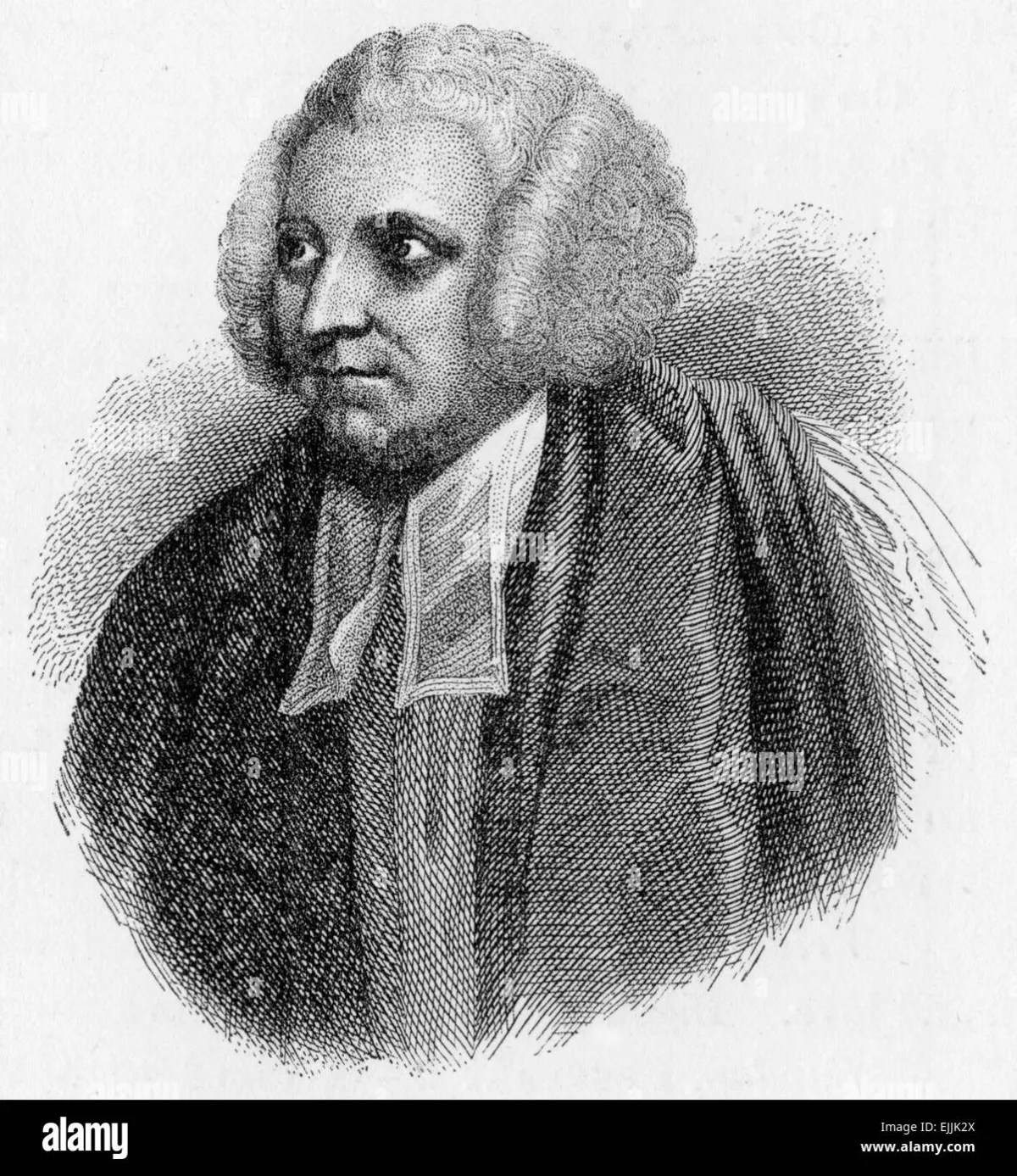 Photo: Robert Lowth, via c8.alamy.com
Some of those rules made intuitive sense. Others were essentially invented to make English more Latin-like, regardless of how English actually worked. The rule against splitting infinitives — "to boldly go" instead of "to go boldly" — exists purely because Latin infinitives can't be split (they're single words). Applying that constraint to English is a bit like telling someone they can't park a car the way they park a bicycle.
These rules crossed the Atlantic and embedded themselves in American education, where they've been taught as objective fact ever since.
'Incorrect' English Is Often Just Different English
Here's what makes the linguistics perspective genuinely eye-opening: the features of speech that get labeled as errors are almost always rule-governed. They follow consistent internal logic. They're not random mistakes — they're features of a different dialect.
Take the double negative. In African American Vernacular English (AAVE), double negatives are used systematically and consistently to intensify negation, the same way they are in Spanish, French, Italian, Russian, and most of the world's languages. "I don't know nothing" isn't a failure to understand negation — it's a grammatically coherent sentence in a dialect with different rules than Standard American English. A linguist can describe those rules precisely. The idea that double negatives are inherently illogical — that two negatives must mean a positive — is a Latin-derived argument that doesn't actually apply to how human language works.
Same goes for features like "ain't," which has a perfectly clear meaning and a consistent grammatical role in the dialects where it's used. Or the habitual "be" in AAVE — "she be working late" — which carries a specific meaning (she regularly works late) that Standard English doesn't have a precise equivalent for. These aren't corruptions of real English. They're features of living dialects that developed their own internal grammar.
How School Turned Dialect Differences Into Moral Failures
The way grammar gets taught in American schools has historically treated Standard American English not as one dialect among many, but as the only legitimate version — the one that reflects intelligence, effort, and character. Speaking a non-standard dialect wasn't framed as a regional or cultural difference. It was framed as a failure.
This framing had — and still has — real consequences. Research on teacher evaluations has repeatedly found that students who speak non-standard dialects are assessed as less intelligent and less capable based purely on their speech, even when their actual work is identical to that of students who speak in more standardized ways. Job applicants face similar biases in interviews. The way someone talks becomes a proxy for their perceived education, class background, and even moral seriousness.
This is why linguists are so careful to distinguish between prescriptive grammar — the rules someone decided we should follow — and descriptive grammar — the patterns that actually emerge when humans use language. Every healthy human language has descriptive grammar. The prescriptive rules layered on top of it are social conventions, not natural laws.
Why the Myth of 'Correct' English Survives
The persistence of the standard-language myth isn't mysterious. Standard American English is genuinely useful — it's the dialect of business, formal writing, higher education, and national media, which means knowing it opens doors. That practical reality gets conflated with the separate claim that it's somehow more correct, more logical, or more expressive than other dialects. The first claim is true. The second isn't, but it does a lot of social work.
There's also the simple fact that language policing feels like education. Correcting someone's grammar reads, to most people, as helpfulness — as passing on a skill that will serve them in the world. The idea that it might also be communicating something about whose way of speaking counts as legitimate is uncomfortable, so it mostly doesn't get examined.
The Takeaway
None of this means Standard American English isn't worth learning. In a practical sense, knowing the dialect that runs most formal American institutions is genuinely valuable — the same way knowing how to write a business email is valuable even if your personal communication style is more casual. Code-switching is a real skill.
But there's a difference between "this dialect is useful in formal contexts" and "this dialect is correct while others are wrong." The first is a practical observation. The second is a social judgment dressed up as a grammar lesson.
The next time someone corrects your English, it's worth asking what they're actually correcting — the grammar, or the accent, or the zip code they think it came from.